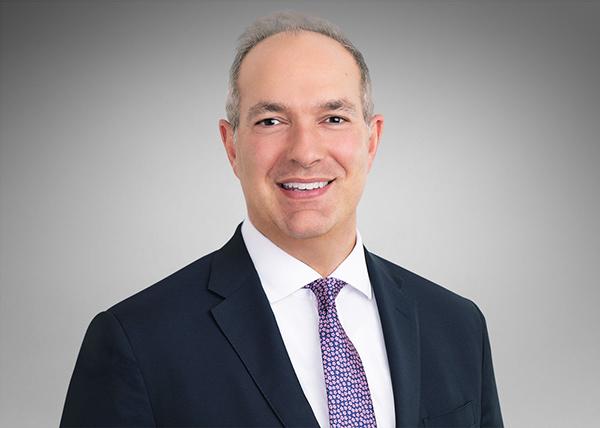
Daniel Suleiman was profiled by Corporate Crime Reporter on Foreign Corrupt Practices Act enforcement under the Trump administration. As an example, he points to the deferred prosecution agreement entered into by client TIGO Guatemala, a unit of Millicom, in November 2025. Under the agreement, Millicom will pay $118 million to settle bribery allegations under the FCPA.
Dan argues that claims the Trump administration has effectively shut down FCPA enforcement are overstated and miss important nuance: while there has been significant turnover at the Justice Department and high level policy statements signaling a shift away from cases seen as harming U.S. business interests, enforcement has not disappeared, particularly for complex cases initiated years earlier. He explains that many current resolutions, including the Millicom/TIGO Guatemala DPA, stem from investigations begun under prior administrations and reflect the long timelines inherent in cross border white collar cases.
He also notes that the administration has revived and formalized arguments—once rejected—that FCPA enforcement can disadvantage U.S. companies, redirecting priorities toward matters implicating national security, drug cartels, or transnational criminal organizations. At the same time, Dan emphasizes that outcomes still depend heavily on factors such as voluntary disclosure, cooperation, and remediation, which can yield substantial penalty reductions and avoid monitors, illustrating that FCPA enforcement remains active but more selective and policy driven than in the past.
Speaking about the Millicom DPA, Dan said, “The case was resolved through a two year deferred prosecution agreement, which is less than the standard three year term for deferred prosecution agreements.”
“The company achieved a fifty percent discount off the bottom of the guidelines range, which is the highest available under the applicable Department policy. And as far as we can tell, it’s the greatest discount ever awarded to a company since the Department began formalizing its policies in this regard. With the fifty percent discount, there is a $60 million criminal penalty and $58.2 million in forfeiture, leading to a $118.2 million resolution.”
“Importantly, in this case the company was recognized for voluntarily disclosing in 2015, but also for its exceptional cooperation in the investigation. It’s also explicitly recognized for its very extensive remediation and the building out of a top notch compliance program. No monitor was imposed. And the two year term is another recognition that the company has come a long way in these last ten years – including in the last three years. All of that is recognized explicitly in the resolution.”


 Back
Back