Covington & Burling LLP operates as a limited liability partnership worldwide, with the practice in England and Wales conducted by an affiliated
limited liability multinational partnership, Covington & Burling LLP, which is formed under the laws of the State of Delaware in the United States
and authorized and regulated by the Solicitors Regulation Authority with registration number 77071..
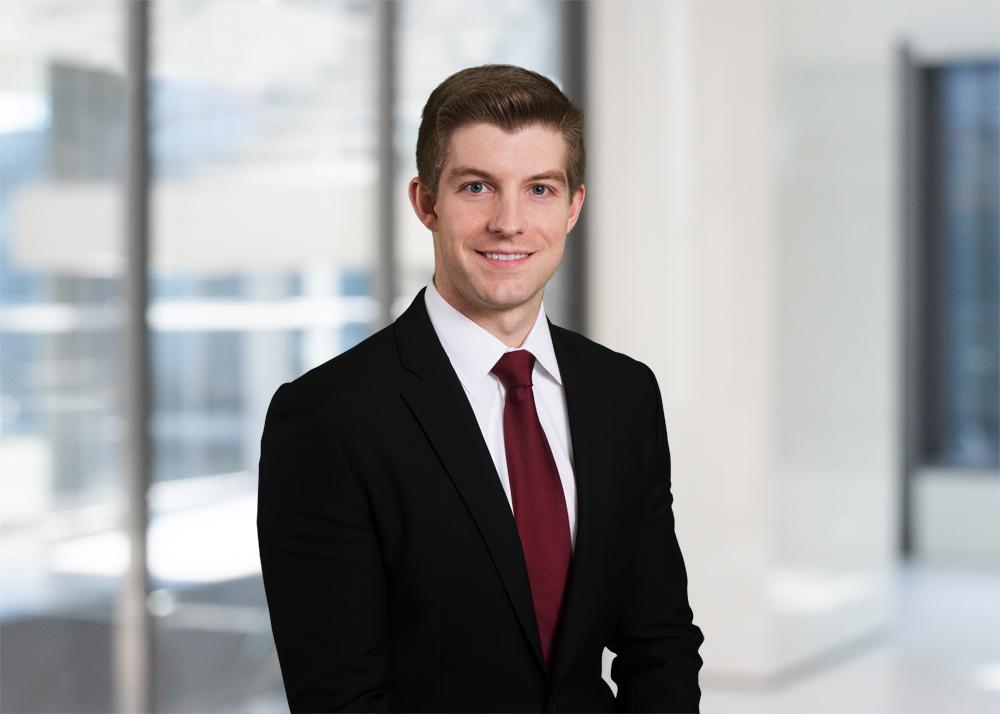
Douglas Behrens litigates high-stakes intellectual property and complex commercial disputes in district courts, the ITC, and the Federal Circuit, with particular experience representing leading life sciences companies in patent litigation.
Douglas guides clients through every stage of litigation, from early case assessment through trial and appeal, leveraging deep technical expertise and courtroom experience to achieve favorable outcomes. He has argued claim construction, pretrial, and discovery motions; taken and defended numerous fact and expert depositions; authored case-dispositive briefs; and managed case and trial teams.
A named inventor on a patent assigned to the U.S. Army, Douglas draws on his chemical engineering background to master complex technologies and translate them into clear, persuasive litigation narratives. He specializes in pharmaceutical, biotechnology, and medical diagnostics cases and also has experience spanning video processing, telecommunications, and multi-factor authentication technologies. Beyond his patent litigation practice, Douglas represents clients in trade secret, copyright, patent licensing, and antitrust disputes. He also advises innovative pharmaceutical companies on regulatory exclusivity, patent term extensions, and Orange Book listings.
Douglas has been named to both the Best Lawyers’ “Ones to Watch” list and Lawdragon’s “500 X – The Next Generation” guide. In addition, his work has been recognized by AmLaw Litigation Daily, which named his Covington team Litigator of the Week Runners-Up following a significant trial victory.
Prior to joining the firm, Douglas served as a law clerk to Judge Kara F. Stoll of the U.S. Court of Appeals for the Federal Circuit and to Judge Richard G. Andrews of the U.S. District Court for the District of Delaware.
Douglas also represents pro bono clients in various civil and criminal matters, including veterans’ benefits and estate planning. Most recently, he presented oral argument at a sentencing hearing that resulted in a reduced sentence for a criminal defendant charged with assault.
Represented leading innovator pharmaceutical company in litigation across multiple districts relating to ophthalmic product that treats glaucoma and ocular hypertension. After prevailing on claim construction and defeating the generic challenger’s motion for judgment on the pleadings, the case settled on favorable terms.
Represented computer manufacturer as respondent in Section 337 investigation before the U.S. International Trade Commission involving video processing technology, resulting in favorable post-hearing settlement.
Represented AstraZeneca, in district court and on appeal, in series of Hatch-Waxman cases concerning its billion dollar Symbicort® combination pMDI inhaler product. The trial victory was recognized by American Lawyer as “runners-up” for its Litigator of the Week honor.
Secured Federal Circuit affirmance of PTAB’s invalidation of all claims in patent directed to multi-factor authentication technology.
Defended biotechnology company against allegations that its products infringed a competitor’s spatial transcriptomics patents. We positioned the case for a favorable settlement on the eve of trial.
Represented Intercept Pharmaceuticals in multiple Hatch-Waxman cases involving its Ocaliva® product for the treatment of primary biliary cholangitis. We prevailed on claim construction, and the case settled on favorable terms for our client the day before trial was set to begin.
Represented leading chip designer in multiple IPR proceedings involving method and system for upconverting telecommunication signals via subharmonic mixing.
Represented AstraZeneca in series of Hatch-Waxman cases for Nexium® and Nexium®24HR, which is used to treat acid reflux.
Represented pioneer pharmaceutical company in Hatch-Waxman litigation concerning its dry powder inhaler product for treating asthma and COPD.
Represented Omeros Corporation, a small biopharmaceutical company, in Hatch-Waxman litigation relating to Omidria®, a combination therapy used during cataract surgery.
Represented innovator pharmaceutical company in asserting patents covering product that treats schizophrenia, bipolar mania, bipolar depression, and major depressive disorder.
Represented branded pharmaceutical company in Hatch-Waxman litigation regarding an oral antibacterial drug that is prescribed to treat acne.
Investigation of pharmaceutical company regarding allegations of “channel stuffing” scheme and misrepresentation of product inventory levels held by wholesalers.


 Back
Back